
SlotLounge Pokies — Real Money Slots for Australian Players
Type “slotlounge pokies” into Google and page one hands you Slots Lounge, Pokies Lounge, The Gaming Lounge and a scatter of aggregators that list game titles without saying who built them. None of that answers the question you have before you load a balance. Which studios supply this lobby? What do the reels do when you spin them? And which games make sense to run a bonus through? This page works through all three, drawing on the provider list that shows up across independent reviews, the RTP figures the studios themselves publish, and the plain maths of a 40x requirement on a AU$30 deposit.

What the SlotLounge pokies lobby holds
The honest bit first. Nobody publishes a reliable game count for this brand. Depending on the review, SlotLounge carries 500 games, 2,000, 5,000, 17,733 or “20,000+”. Not one of those figures appears twice across independent sources, and the larger ones look copied from a group-wide catalogue rather than counted in the lobby. What holds up is that the library runs into several thousand titles, with a provider roster deep enough that the exact number stops mattering.
The studios that show up across at least three independent reviews are Pragmatic Play, NetEnt, Evolution Gaming, Yggdrasil, Play’n GO, Microgaming, Hacksaw Gaming, NoLimit City and BGaming. Evolution is the live supplier, so it powers the live dealer tables rather than anything on the reels. The other eight cover most of what an Australian player would recognise from other offshore casinos.
One expectation to set early: Aristocrat pub titles are not confirmed in the lobby. Big Red, Where’s the Gold, Queen of the Nile and the rest of the pub cabinet run on Aristocrat’s own online content, which the company licenses to a short list of regulated operators rather than offshore Curaçao sites. So when a review promises “classic Aussie pokies” at a site like this one, treat it as a claim to verify rather than a settled fact. The closest substitutes in feel are BGaming’s simpler builds and Pragmatic’s lower-volatility fruit titles.
Sorting runs on provider and the usual New, Popular and Jackpot tabs. What the lobby does not offer, going by the reviews that describe it, is a volatility filter, and that is the one control a pokies player benefits from most. Without it you open each game’s info panel to read the volatility rating and the published return before you commit a bonus to a title. The same lobby loads through the browser, so you can spin on your phone without hunting for an install file.
The studios that define this lobby
Most sites show provider logos in a wall and stop there. That helps nobody, because the real difference between two studios is how fast each one moves your balance.
Pragmatic Play
Pragmatic is the volume supplier and the safest entry point. Gates of Olympus, Sweet Bonanza, the Big Bass series and the Sugar Rush family are all theirs, and they share a design philosophy: medium to high volatility, frequent small tumbles, and a bonus round you can reach without buying it. Published RTP on their headline titles sits between roughly 96.2% and 96.7%. This is the corner of the lobby to visit when you want a session to last. AU$0.20 spins on Big Bass Bonanza return enough small hits to keep the reels turning for a few hundred spins, and that matters once a wagering requirement is attached.
Hacksaw Gaming
Hacksaw builds short, sharp, deliberately brutal games. Wanted Dead or a Wild is the flagship and it is representative: published RTP around 96.4%, extreme volatility, and long dead stretches broken up by a bonus that either pays several thousand times your stake or almost nothing. Chaos Crew, Le Bandit and Rip City reuse the template with different skins. The studio also leans hard on feature buys, usually priced between about 60 and 200 times your stake, and that pricing tells you everything about the variance. On a AU$30 balance a single buy can end the session before it starts.
NoLimit City
NoLimit is the most extreme studio in the building, and the one most likely to catch out a player who has only touched Pragmatic. Mental, San Quentin, Fire in the Hole and Tombstone run the xWays, xNudge and xSplit mechanics, stacking multipliers into enormous theoretical maximums. Mental publishes a 66,666x cap at an RTP near 96.1%. The price of that ceiling is a base game that can eat two hundred spins without a meaningful hit, plus several tiers of feature entry at rising prices. Treat these as entertainment; they make a poor route to clearing a bonus.
Play’n GO
Play’n GO sits between the two camps. Book of Dead is the title everyone knows: an expanding symbol on the free spins round, published RTP around 96.2%, high volatility but not the punishing kind. Reactoonz and its sequel run a cluster grid with a cascading multiplier build that behaves nothing like the Pragmatic catalogue. The maths is conventional and the mechanics rarely need reading about first, which makes the studio a sensible default when you want the bonus round reachable through ordinary play.
NetEnt and BGaming
NetEnt supplies the low-volatility end. Starburst is still the most-played title of its type anywhere, with a published return just above 96% and a hit frequency high enough that losing a balance quickly on it takes effort. Gonzo’s Quest, Dead or Alive II and the Divine Fortune jackpot family round out the presence. BGaming is the crypto-native studio in the group, which shows in the design: simple interfaces, provably fair variants on some titles, and dice formats sitting alongside conventional reels. Yggdrasil and Microgaming fill out the rest of the catalogue, with Microgaming carrying the progressive jackpot network when the operator has that feed switched on.
Pokie types you will meet
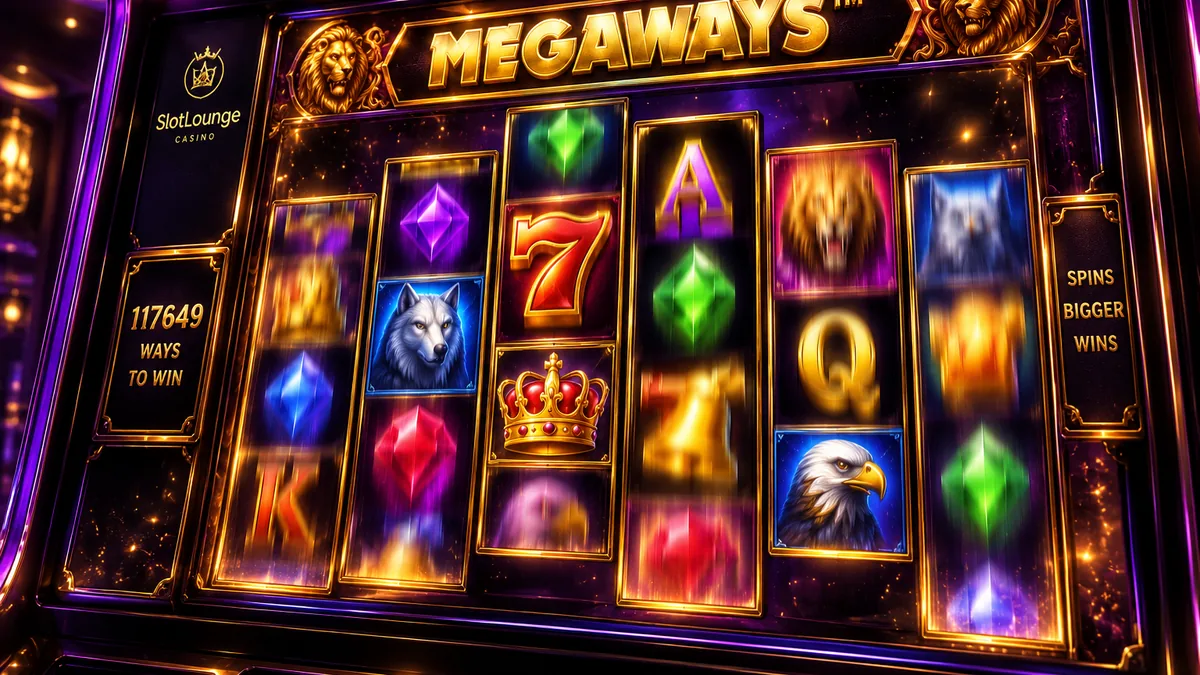
Megaways
Megaways is a mechanic licensed from Big Time Gaming rather than a studio, which is why you find it stamped on games from half a dozen different suppliers. Each reel drops a variable number of symbols on every spin, producing anything up to 117,649 ways to win when all six land at full height, and winning symbols cascade away so a single spin can chain into several payouts.
The consequence is that Megaways titles run high volatility almost without exception, since the maths has to account for those rare full-height spins. The cascades also generate activity that reads as “nearly winning” without returning much, which catches out players used to fixed-line games where a dead spin looks dead.
Hold and win
Hold and win, sometimes labelled Hold & Spin or Link & Win, triggers when enough cash-value symbols land at once. Those symbols lock in place, you get three respins, and the counter resets every time another one lands. Fill the grid and you take the top prize. It is the most transparent format in the lobby, because you can see exactly what you are chasing. Pragmatic’s Big Bass series is the version most Australians will recognise, and it treats a small balance far better than anything from Hacksaw or NoLimit.
Cluster pays
Cluster games drop paylines entirely. You win by landing a group of matching symbols touching each other on a grid, usually five or more, and the winning cluster is removed so fresh symbols fall into the gap. Play’n GO’s Reactoonz and NetEnt’s Aloha! Cluster Pays are the reference points, while Pragmatic’s Sweet Bonanza uses a related pays-anywhere tumble system. These titles build multipliers across a chain of tumbles, so a spin’s value depends on how long the chain runs. They look friendly and low-stakes and often are not, so read the volatility rating before you settle in.
Jackpot pokies
Progressive titles pool a slice of every bet across all casinos on the same network until someone triggers the prize. Microgaming runs the long-standing one, and NetEnt keeps a smaller pool through the Divine Fortune family. The headline figure is real money, though the odds of taking it are a rounding error, and base-game return on a progressive sits below a standard pokie because part of the RTP is diverted into the pool. They suit a small stake played for the lottery ticket attached to it, and they are the wrong place to run bonus wagering.
Eight titles worth opening first
These eight titles turn up most often in the reviews that cover this lobby, so they are a sensible place to start. Six are pokies. The last two are Evolution game-show and live-roulette products that share the same lobby view and get filed under “games” by most listings, so they sit here for completeness rather than as reel games.
 Gates of Olympus
 Sweet Bonanza
 Big Bass Bonanza
 Book of Dead
 Wanted Dead or a Wild
 Mental
 Crazy Time
 Lightning Roulette
| Title | Studio | Provider default RTP | Volatility | Suits |
|---|---|---|---|---|
| Big Bass Bonanza | Pragmatic Play | 96.71% | Medium-high | Small balances, bonus wagering |
| Sweet Bonanza | Pragmatic Play | 96.51% | High | Tumble chasers, mid-size sessions |
| Gates of Olympus | Pragmatic Play | 96.50% | Very high | Multiplier hunting, not wagering |
| Wanted Dead or a Wild | Hacksaw Gaming | 96.38% | Extreme | Short entertainment sessions |
| Book of Dead | Play’n GO | 96.21% | High | Classic expanding-symbol play |
| Mental | NoLimit City | 96.08% | Extreme | Experienced players with a fixed budget |
| Crazy Time | Evolution (live) | 96.08% top | Very high | Live game show, not a pokie |
| Lightning Roulette | Evolution (live) | 97.30% | Medium | Live table play, not a pokie |
One caveat on that column. These are provider-published default RTP figures, and a casino can run a lower-RTP build of the same game. Read the numbers as the studio’s setting rather than a guarantee of return. The info panel inside the game window shows the figure for the build you are actually spinning, and that is the only version that applies to your money.
Check which builds are live in the lobby todayWhich pokies suit bonus wagering
The welcome package runs across four deposits to a headline of AU$22,500 with 350 free spins, at 40x wagering on a seven-day clock. Some listings show 50x on the welcome tiers, so confirm the figure in the cashier before you opt in. Those two numbers decide your game choice. Forty times is heavy, and seven days is too short to grind out at minimum stakes. You need turnover, and turnover comes from games that keep returning small amounts rather than games that hold everything back for one enormous bonus round.
The scale of that turnover is easy to underrate. For example, a AU$100 bonus at 40x asks for AU$4,000 of bets before any of it becomes withdrawable, and the AU$22,500 headline sits far beyond what most players cycle through in a week. The top figure is a ceiling on the promotion, not a target you are meant to reach, and at 50x every turnover number rises by a quarter.
Contribution weighting is the first thing to check. At SlotLounge, as at most Curaçao-licensed casinos, wagering on pokies counts 100% while live tables and roulette contribute a fraction of that or nothing at all. Confirm the exact percentages in the bonus terms, since they vary between promotions on the same site. Spinning a live table during an active bonus is the most common way players lose a week of progress without noticing.
Against a 40x requirement the games that work sit in the medium volatility band with a high hit frequency. Big Bass Bonanza, Starburst and the Sugar Rush family keep a balance alive across the thousands of spins involved. The ones that do not work are Mental, Wanted Dead or a Wild and Gates of Olympus, all built to empty a balance repeatedly in exchange for a rare large hit. Clearing 40x on an extreme-volatility title is possible, just far less likely than busting first.
Two more constraints. Most bonus terms across the market prohibit feature buys while a bonus is active, and pressing that button anyway is a standard reason for a voided balance. There is also a maximum bet cap that applies while you wager, and the welcome terms set their own figure. Exceeding it once is enough to void the lot.
Working through the 350 free spins, expect the winnings to arrive as bonus funds under the same requirement, and what those spins convert to is capped. That ceiling limits the upside of chasing a huge hit, which is one more reason to favour steady games while the wagering clock is running.
Volatility, RTP and what they mean for a AU$30 bankroll
AU$30 is the minimum deposit here, and it makes a useful test case, because it exposes how little RTP matters next to volatility. Look at the published figures for the titles above.
The spread between highest and lowest is 1.22 percentage points. On AU$30 of turnover that is worth about 37 cents in theory, and RTP is calculated across millions of spins you will never personally play. Volatility decides whether your AU$30 lasts forty spins or four hundred. That is the variable shaping your actual evening, and the one almost every review skips over in favour of quoting return percentages.
With AU$30 on a medium-volatility title at AU$0.20 a spin you get around 150 spins before variance has much say, and the small returns along the way usually stretch that past 200. The same AU$30 on Mental or Wanted Dead or a Wild often disappears inside 60 spins, because those games are built to run dry between features. Both are doing their job. The confusion comes from treating two RTP figures as if they made the games comparable.
A sensible sizing rule follows from that. On extreme-volatility titles keep any single spin under 0.5% of the balance you are prepared to lose, which is 15 cents on AU$30 and a stake most Hacksaw and NoLimit games accept. Medium volatility runs comfortably at 1%. Set the stake by how long you want the session to run, not by the size of the jackpot on the loading screen, and adjust down the moment a run of dead spins starts eating the balance faster than you planned.
You will need to deposit in AUD first, which the site takes natively, so no conversion spread eats into the balance on every top-up. Full context on the brand, including its Curaçao licence, sits in our SlotLounge Casino review.
Fund an account and pick a pokieFAQ
Which pokies clear the 40x wagering fastest?
Medium-volatility games with a high hit frequency, since turnover clears a requirement and dead spins generate none. Big Bass Bonanza, Starburst and the Sugar Rush titles are the practical picks. Steer clear of extreme-volatility games and progressive jackpots while a bonus is active. You will need to open an account first, because bonus terms only attach to a registered and verified account.
Are Aristocrat pub pokies like Queen of the Nile in the lobby?
They are not confirmed in the lobby. Aristocrat keeps its online content with a short list of regulated operators rather than offshore Curaçao sites, so a listing that promises Queen of the Nile here is one to double-check rather than trust. BGaming’s simpler builds and Pragmatic’s fruit titles are the nearest thing in pace.
Can I buy bonus features while a welcome bonus is active?
Usually not. Feature buys are prohibited during active wagering under most bonus terms in the offshore market, and doing it anyway is standard grounds for voiding a bonus balance. Read the SlotLounge wording before you assume, since a handful of operators allow buys at reduced contribution. With no bonus attached to your balance, they are yours to use as you like.
Is the RTP the same at every casino that hosts these games?
Not necessarily. Pragmatic Play, Play’n GO and NoLimit City all ship multiple RTP configurations of the same title, and the operator picks which build to host. A game published at 96.5% may run at 94.5% somewhere else. The only reliable check is the info panel inside the game window at the casino you are playing on.
Do the pokies run properly on an Australian phone connection?
Yes. Everything runs as HTML5 in the browser rather than through an installed app. Load times on a mobile network stretch out for the heavier Megaways and cluster titles, which stream a lot of animation, so a stable connection matters more than raw speed. Adding the site to your home screen gives a full-screen view that behaves close enough to a native app for daily use.
About this page. Written and maintained by the SlotLounge Australia editorial team. Bonus terms, banking limits and payout times are re-checked against the operator's own pages and public registries; where sources disagree, we say so on the page rather than pick the prettier number.